
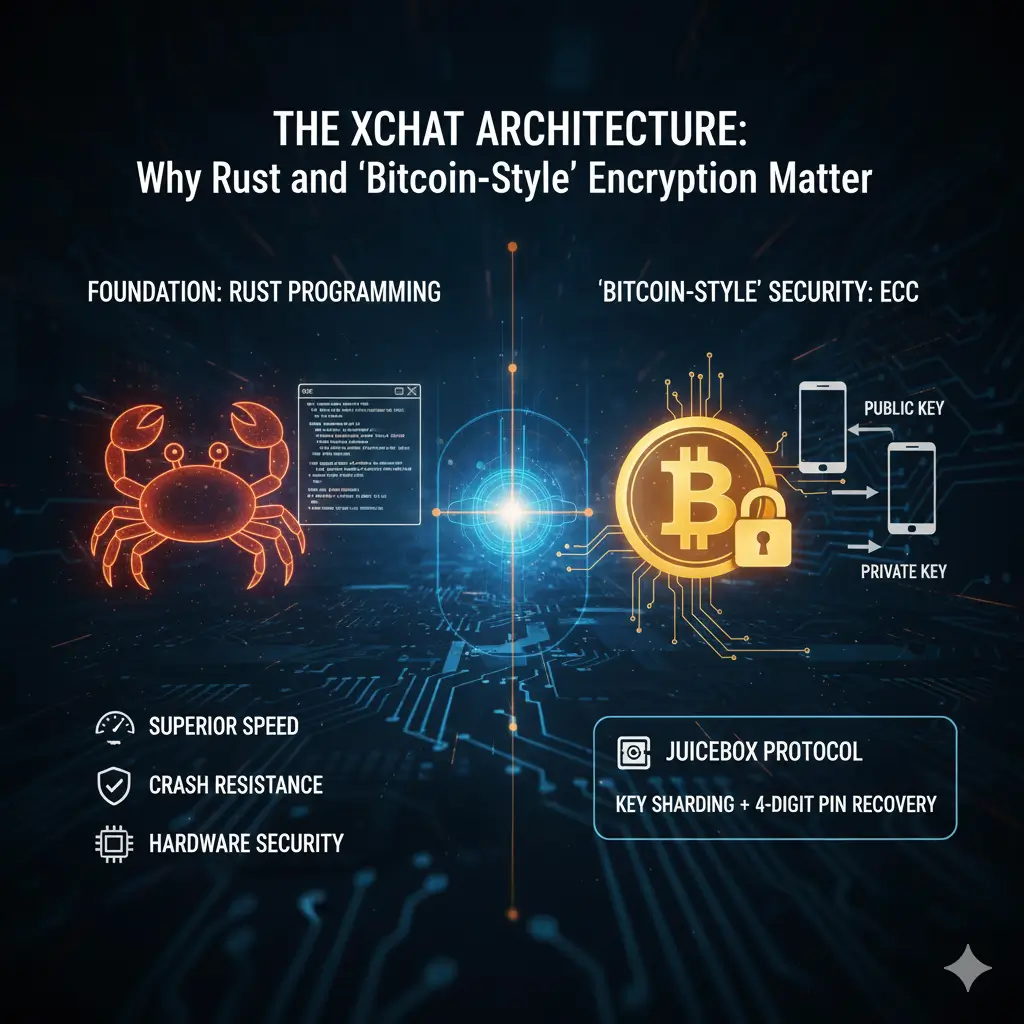
The Foundation: Why XChat is Built on Rust
Unlike traditional messaging apps that rely on older coding languages, XChat is built from the ground up using Rust. In the world of software engineering, Rust is known for “Memory Safety.”
Why does this matter for you? Most security hacks in apps like WhatsApp or older versions of Android happen because of “memory leaks” or “buffer overflows.” Rust makes these errors almost impossible. By using a Rust-based architecture, XChat provides:
- Superior Speed: Instant message delivery even on slow networks.
- Crash Resistance: The app handles high-definition 4K video calls without lagging or freezing.
- Hardware Security: Better integration with the secure chips inside modern smartphones.
“Bitcoin-Style” Security Explained
Elon Musk has described XChat’s encryption as “Bitcoin-style.” To be technically accurate, this refers to Elliptic Curve Cryptography (ECC).
Just like a crypto wallet, XChat creates a Public Key and a Private Key on your device:
- Public Key: Acts like your address that others use to send you messages.
- Private Key: Stays hidden on your device and is the only “key” that can unlock and read your messages.
Because XChat uses this decentralized approach, even if a server were compromised, the hacker would see nothing but scrambled code. Your privacy is protected by the same mathematical laws that secure the global blockchain.
The “Juicebox” Protocol
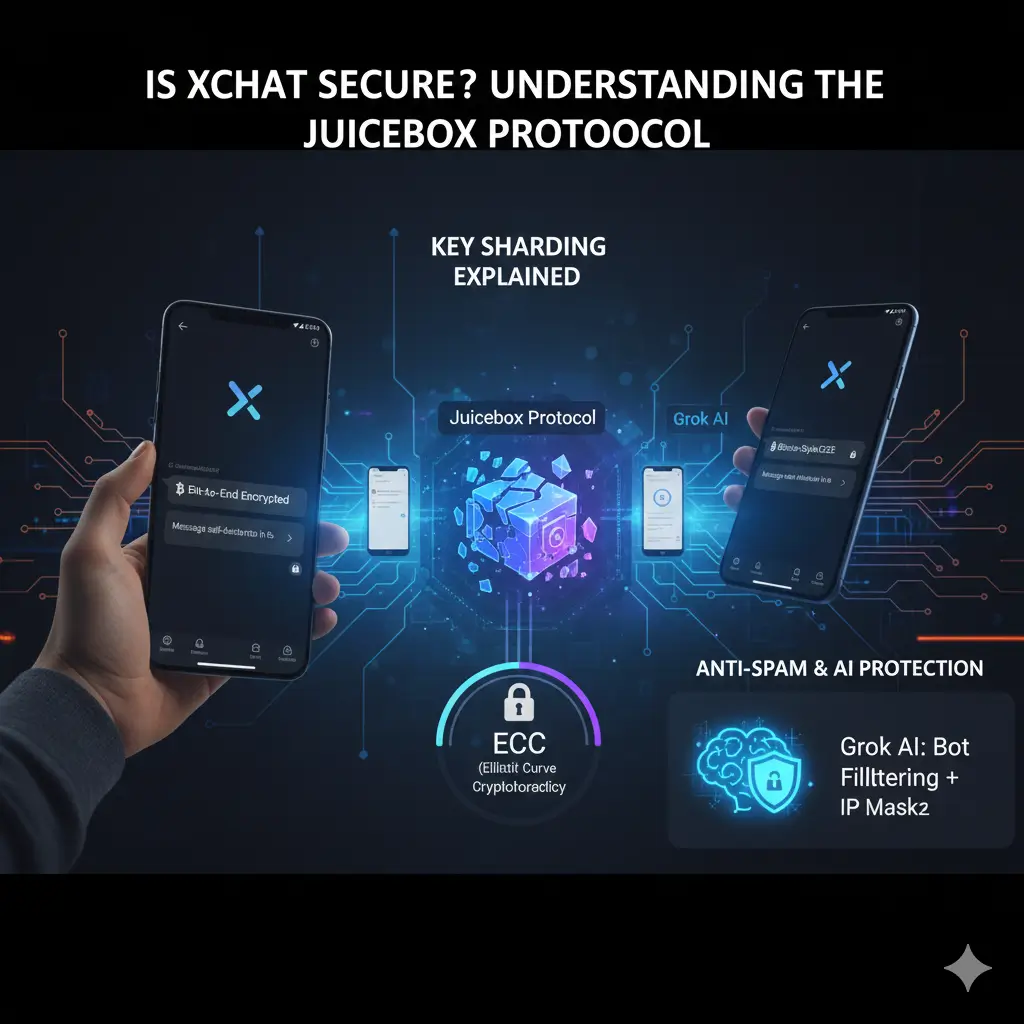
XChat utilizes the Juicebox Protocol for key management. This is a breakthrough because it allows you to recover your encrypted chats on a new phone using a simple 4-digit PIN, without X.com ever knowing your actual private keys. It balances the high security of Signal with the ease of use of a modern social app.

Leave a Reply